Showing posts with label Technology. Show all posts

Monday, 1 June 2020

NEW DAWN: KWARA STATE GOVERNOR SLASHES ROW FOR TELECOMS

Kwara  state governor Mallam AbdulRahman AbdulRazaq has slashed the Right of way for all telecoms companies in the state fro the previous N5,500 per linear meter to N1 per kilometer of fibre which will also have a great effect on the positive growth of the state economy. 

Mallam AbdulRahman AbdulRazaq said this "I have directed the slashing of the Right of Way (RoW) fee for telecommunication firms (telcos) from N5,500 per linear metre to N1 per kilometre of fibre. 

The reduction takes immediate effect.

This will drive up investment in the telecommunication sector, encourage digital penetration, especially in the remotest parts of our state, and increase the state’s ease of doing business ratings.

#ISENLO"  
After he was interviewed and on all his social media pages. 
This shows that the activeness of the governor after his one year on sit will still continue till the end. 
He has shown a great sign of the leadership quality he has which others state governors, commissioners, and other executives of the country should imbibe too. 
He mentioned this after he facilitated with the youngest speaker of kwara state.
He said (Kwara state governor) "I felicitate with the Speaker of the Kwara State House of Assembly, Rt. Hon. Salihu Yakubu-Danladi, on his 35th birthday anniversary. 

Apart from being the youngest Speaker ever in the history of Kwara State and one of the youngest ever in Nigeria, the Rt. Honourable Speaker has carried himself in the manner most befitting of the exalted office. His leadership of the House engenders unity, focus, and determination with which the lawmakers have joined hands with the executive to constantly deliver on our mandate to restore the glory of Kwara State.

The executive arm is proud to be working with a Speaker and his colleagues who share the same worldview of probity, prudence, accountability, service to humanity."

This also shows that he has a good relationship with his speaker, which other young school leavers should look up to. 

HOW TO PROTECT YOUR FACEBOOK ACCOUNT AFTER DEATH

It is very important to protect someones account before death, so that unknown people won't have access to the account after the person is dead or not using the account anymore. 
This tips teaches us how to protect our Facebook account from evil hands even after we are no more 
It's very absurd to hear that someone might have access to your account after you are no more. Since you are dead you can't have access to the account and it won't speak well if anybody from somewhere else use your account to do fraud in your absence. 
Facebook  has come up with another way to protect our Facebook account from crackers all around the world. 
This account can only be access by single person which you choose take care of the account after you are dead. He is the only one that can control your account in your absence. 
These are the things they can be able to do on your account
1. Manage tribute posts on your profile, which includes who can post and who can see posts, deleting posts and tags
2. Request the removal of your account
3. Respond to new friend requests
4. Update your profile picture and cover photos
The steps are given below
1.ciick on update profile 
2. Click on the image on the screen to move to the next page.
3. Choose legacy account if you want to add the person to manage your account or you click on delete after death, if you don't want anyone to have access to the account.
4. Type the name of the friend or someone, you want to manage your account after death.
5. Click on  send, to deliver the short message into the person message inbox. In other to inform the person about the memorialization of the account.
6. Done

Friday, 17 August 2018

The new replacement for wheel chair- SUITX

The exoskeleton suitX is developed by a group of university students and developed for adults and children with neurological disorders that affect their gait, such as spinal cord injuries, stroke, traumatic brain injuries, and cerebral palsy. The SuitX is made up of three different components named after the parts of your body they’re protecting: the BackX; the LegX to make it easier to hold a crouched position; and the ShoulderX to reduce strain when working above your head. With the LegX, you can squat for hours without feeling any strain in your legs or knees. It’s like having your own personal chair that goes with you everywhere.  According to a lady who wore the exoskeleton, she said “I feel superhuman. I just lifted a 50 pound box like it weighed almost nothing — no gym time required. I’m wearing an exoskeleton by SuitX that’s supporting my back, using a clever system of springs and clutches to give me a boost”. The suitX can replace the wheel chair in the nearest future if the developers succeed in making it accessible for everyone while making it cheaper and affordable.

Sunday, 12 August 2018

Egyptian students design car that runs on air

CAIRO (Reuters) - A group of Egyptian students has designed a vehicle they say will battle rising energy prices and promote clean energy by running on nothing but air.

Mechanical engineering students from Helwan University check the air-powered vehicle that they have designed to promote clean energy and battle increasing gas prices, in Cairo, Egypt August 7, 2018. Picture taken August 7, 2018. REUTERS/Mohamed Abd El Ghany

The undergraduate students, who built the vehicle as part of their graduation project from Helwan University just outside Cairo, are rolling out a prototype one-person vehicle that runs on compressed oxygen.

The go-kart-like vehicle comes as Egypt pushes ahead with painful economic reforms that include deep cuts to energy subsidies, measures tied to a three-year $12 billion IMF loan program it began in late 2016.

Slideshow (5 Images)

The students say their vehicle can hit 40 kilometers an hour and last 30 kilometers before needing to be refueled, and it only costs about 18,000 Egyptian pounds ($1,008.40) to build.

“The operational cost of the vehicle... will be almost nothing. You are basically using compressed air. You are not paying for fuel and also you do not need cooling,” said Mahmoud Yasser, a student who helped design it.

The team is now looking to raise funding to expand the project and mass produce the vehicles. They believe they can eventually get the vehicles to top 100 kilometers an hour and run for 100 kilometers before needing to come up for air.

($1 = 17.8500 Egyptian pounds)

Reporting by Mostafa Salem, Amr Abdallah and Mohamed Zaki; Editing by Jan Harvey

Wednesday, 8 August 2018

Tesla CEO confirms intention to privatise US top electric car maker

US top electronic auto maker Tesla CEO Elon Musk has confirmed that he wants to take Tesla private.

In an email to all Tesla employees earlier Tuesday, Musk said he is going to take Tesla private in the future at a price of 420 U.S. dollars per share.

"I'm trying to accomplish an outcome where Tesla can operate at its best, free from as much distraction and short-term thinking as possible, and where there is as little change for all of our investors, including all of our employees, as possible," he said.

Musk denied the privatization intention was taken out of his desire for greater control of the electric car company, saying "I own about 20 percent of the company now, and I don't envision that being substantially different after any deal is completed."

He said a final decision has not yet been made, but the move to privatize the company will create "the environment for Tesla to operate best."

Musk noted that short-sellers and quarterly investor scrutiny, which often cause "wild swings" in the stock price of Tesla as a public company, are "a major distraction for everyone working at Tesla" and put enormous pressure on Tesla to make decisions that may not "necessarily be right for the long-term."

"Shareholders could either to sell at 420 or hold shares & go private," he tweeted Tuesday afternoon.

He said there will be "no forced sales" of Tesla shares, but he hopes "all shareholders (will) remain."

"Will be way smoother & less disruptive as a private company. Ends negative propaganda from shorts," Musk said in the twitter post.

Founded in 2003, Tesla launched its initial public offering (IPO) on NASDAQ on June 29, 2010, and the IPO raised 226 million dollars for the company. Tesla saw its market cap at about 42 billion dollars in April 2018.

Wednesday, 18 July 2018

EU hits Google with hefty $5b fine over Android dominance

Google: hit with $5billion fine by EU over Android dominance

The EU has hit Google with its biggest ever fine, imposing a 4.34 billion euro ($5 billion) penalty on the US tech giant for illegally abusing the dominance of its operating system for mobile devices.

Brussels on Wednesday accused Google of using the Android system’s near-stranglehold on smartphones and tablets to promote the use of its own Google search engine and shut out rivals.

The decision, which follows a three-year EU investigation, comes as fears of a transatlantic trade war mount because of President Donald Trump’s decision to impose tariffs on European steel and aluminium exports.

“Google has engaged in illegal practices to cement its dominant market position in internet search,” EU Competition Commissioner Margrethe Vestager said as she announced the huge fine.

The new sanction nearly doubles the previous record EU antitrust fine of 2.4 billion euros, which also targeted Google, in that case for the Silicon Valley titan’s shopping comparison service in 2017.

Denmark’s Vestager ordered Google to “put an effective end to this conduct within 90 days or face penalty payments” of up to five percent of its average daily turnover.

The Google decision comes just one week before European Commission chief Jean-Claude Juncker is due to travel to the United States for crucial talks with US President Donald Trump on the tariffs dispute and other issues.

But Vestager — who was reportedly dubbed by Trump the “tax lady” who “hates the US” after she took on a string of Silicon Valley giants — insisted that she was not anti-American.

“I very much like the US… but the fact is that this (case) has nothing to do with how I feel,” she said.

Google chief Sundar Pichai immediately said the firm would appeal.

“Today’s decision rejects the business model that supports Android, which has created more choice for everyone, not less. We intend to appeal,” Pichai said in a blog post.

Google provides Android free to smartphone manufacturers and generates most of its revenue from selling advertisements that appear along with search results.

The EU says Android is used on around 80 percent of mobile devices, both in Europe and worldwide.

Saturday, 14 July 2018

NPA suspends four shipping lines over bay compliance

shipping

The Nigerian Ports Authority (NPA) has suspended four shipping lines in order to resolve the protest by truck drivers at the Lagos Port Complex and the Tin Can Island Ports, Lagos.

The NPA hereby announces a 10-day suspension of the services of Maerskline, Osco Shipping, CAPS, and Lansal shipping companies, which commences today.

According to a statement signed by Isah Suwaid, the Assistant General Manager, Corporate and Strategic Communications Division, the suspension is due to the Authority’s checks, which revealed that the four companies have failed to comply with the directive to acquire and operate holding bays, as they have either failed to utilise their holding bays or do not have adequate capacity to handle the volume of containers that they deal with.

These companies have also been found guilty of importing a larger number of empty containers which has contributed to the persistent congestion around the Lagos Port Complex and the Tin Can Island Port, spreading to other parts of the Lagos metropolis where truck drivers with no immediate business at the ports now park their trucks.

At the expiration of this suspension, the Authority will review the level of compliance to its directives and determine further actions.

In addition to this, the NPA will henceforth embark on a regular compliance check of the operations of holding bays by shipping companies and terminal operators and defaulters will be sanctioned.

Also, stakeholders have agreed that while the call up system through the ports management as advised by shipping companies will remain in force, personnel of the Nigerian Navy will discontinue the issuance of call ups, even though they will remain on the traffic management team.

The Authority also wishes to state that the planned introduction of a new service charge called “Empty positioning fee” by shipping lines is illegal and should not be honoured by any operator.

Tuesday, 10 July 2018

How To Convert Text to Audio

Did you know that you can convert Text into Audio in your Windows Pc using Notepad without downloading any software. 

Converting of Text files to Audio without software works very easy and doesn't need any advance Pc trick. This is one of the popular feature in a document right now, so learn how you can convert text to audio using notepad yourself.

Use Notepad to Convert Text to Speech

Notepad has so many features and advance tricks which you can use for so many things. Notepad has so many viruses and is more dangerious than some commands in cmd.

We use notepad becuase many text editor out there aren't working as we expected, so i have decided to show you how to create a text to speech output. Now you knwo what notepad can do apart from jsut saving text and crashing systems using .Bat.

This steps below will make it easy for your Windows Pc to speak out loud what you type.

1. Open Notepad on Your WIndowss 10 or 7 Pc

2. Now Copy or download this Program and Paste in your Windows Pc

How To Reply Whatsapp Messages Without Appearing Online

This post will be putting you through on How To Reply WhatsApp Messages Without Appearing Online to avoid embarrassing situations or save you from being monitored. We also have an article on How to Make Money Successfully by Selling Online on Fiverr.

In a recent post, we discussed how to achieve this by using an app called Unseen. In case you miss the post, you may read it from this link.

This time, we’ll be discussing a simple method that doesn’t require any app, which is by replying offline.

How To Reply Whatsapp Messages Without Appearing Online

To answer/ reply a WhatsApp chat offline, follow the steps below.

Disable mobile network connection on your mobile phone.


Open the WhatsApp conversation you want to reply.


Type in your message and close WhatsApp on your phone.


You can then activate your mobile network connection.


This means that the WhatsApp message will be sent, why no one sees you online.

Enjoy and share with friends!

How to get N100 airtime from MTN for free

MTN Music+ allows MTN subscribers to listen to the latest music. Most of you already know what the MTN Music+ app is, but if you are still lost, I advice you to check this post on Get unlimited MTN Airtime using Music+ app.

The MTN Music+ app also allows all users to get points by completing daily logins. If you login for the first day, you will get 10 points. The 2nd day will give you 20 points, 3rd day will give you 30 points, 4th day will give you 40 points and the 5th day and so on, will reward you with 50 points.

These points will be added to your Music+ account balance. The daily logins should be in successive  i.e if monday is your first day of login, logging in on tuesday will reward you with 20 points. If by any given chance you don’t login everyday, then you will have to start all the way from 10 points again.

When these points get to a certain amount, you can exchange these points for airtime, full track or free trial. Here is the exchange value for each points;

N100 airtime = 5000 points


N50 airtime = 3000 points


N10 airtime = 1000 points


1 Day Unlimited Streaming = 100 points


Full Track = 5000 points


In one of our previous post, we looked at how we can get 3000 points on MTN Music+which is equivalent to N50 airtime Music+. Now, Music+ is rewarding its users with 5000 bonus points (N100 airtime/Full Track) after first login. Although you can exchange the 5000 bonus points for a full music track but who wants to neglect the free N100 airtime for just a bunch of music.

How to get 5000 bonus points on MTN Music+

Download MTN Music+ app – here


Install the apk


Launch the Music+ app


Tap on Login with your phone number


Type in your MTN number and click on Get Code at the side


Insert the code that was sent to you as text into the empty box and click Log In


Underneath the music categories (this is the second tab), click on the banner that reads;


New User Reward! 5,000 BONUS POINTS REWARD TO NEW USES AFTER FIRST LOGIN


You should see something like the screenshot below. All you need to do is tap GET BONUS POINTS and you are done.


For those of you who have gotten the 3000 points from Music+, you won’t be able to get this 5000 bonus points. Enjoy!

How to Track your Partner’s Mobile Phone without Permission

Tracking your partner’s phone is ethically wrong. But if you have a strong suspicion that your partner is having an affair then it’s better to know for sure that your assumptions are true or not otherwise it will create havoc in your life. So, at that time tracking your partner’s phone seems to be the only choice. We advise you not to track it without the permission of your partner, though if you need the permission of the company to do so, here are some useful ways to learn how to track your partner’s mobile phone without permission.

mSpy

mSpy is credited as one of the best monitoring apps. It is compatible in android, iOS, Mac OS and Windows. The charge for installing mSpy in any device is $29.99 which is comparatively lower than others and it comes with 10 days money back guarantee. mSpy claims to be 100% undetectable. It can track the location of your partner along with having access to his / her text messages, call history, emails, calendars, address book, photos and videos. You can limit incoming calls in your partner’s phone along with monitoring Internet activities and reading instant chat messages.

Source: getjar

SpyBubble

SpyBubble is one of the most trusted and powerful apps when it comes to tracking other devices. It is compatible with Symbian, android, Blackberry, Windows and iOS. If you want to install it in your partner’s phone then you have to buy it for $49.95. You can track your partner’s calls, messages, location, email, URLs along with having full access to his/ her phone book.

Source: prospybubble

Mobile Spy

The Mobile Spy app is available for $49.97 and is used by parents to track children or can be used to track ones partner too. It is compatible with android and BlackBerryphones. Its premium plan allows monitoring and commanding the target device live. Its other features are tracking location, locking or unlocking the device with a siren alarm which is optional, email tracking, phone call information, photo log, alerts you when there is some prohibited activities going on in the target device along with lots of other features.

Source: phonespyonline

The Truth Spy

With a small fee of $16.99, The Truth Spy can be easily installed in your partner’s phone. It is completely stealthy and hides itself extremely well while working continuously in the background. After setting it up in the target mobile. The Truth Spy will send all the information through a secure online portal into your personal account.

Source: thetruthspy

iSpyoo

The iSpyoo app is compatible with Android and iOS devices. It can be installed with a small fee of $22.99 and can stealthy provide the basic information like location and call logs of the target device.

Source: ispyoo

7 Unknown Things you can do with your Android phone

Having a Smartphone (Android Phone) is one thing, knowing how to utilize it for the Best use is another, and yeah, that’s the reason Talk Tech was established. We want to bring the knowledge of Android down to a beginner level so even a newly born baby can understand, (Maybe). In This post, I am exposing you to 7 Unknown Things you can do with your Android phone.

Just for the Records, The Android OS is an Operating System owned and managed by Google. The Recent version, which is the Android Marshmallow, is the sixth version of the Android OS with beautiful features and cool User interface.

The Android OS runs on most mobile brands, starting from the Samsung, Tecno, HTC, ZTE and many more. There are so many things you can do with your Android Phone actually, but I would be showing you the based on the necessities as a beginner. As time goes on, you would begin to see the value and importance of that device you have in your Hand. One thing leads to another.

7 Unknown Things you can do with your Android phone

1. As a Router/Hotspot Tool:

If you have ever thought of browsing with your PC, the basic tool any individual would want to see is your Laptop/Computer as the case may be, and a modem stocked into the PC but then, do you know that with your PC, You can be able to use your Android Device as a middleman between you and the internet? Your Android Phone, starting from the version 2.0 OS, allows you to create a Wi-Fi hotspot that can be detected by your computer or even through a USB port on our phone. When this action is performed, the Android phone can act as a Modem which powers or grants you access towards surfing the net. You might be asking why I need this when I can easily do this with my modem but the truth is, there are cases where you might not have access to your modem or even in cases where you would want to share the data on your phone with your PC especially when these Telco guys become happy or go gaga.

2. As an External/Removable Disk:

Most Smartphones running the Android OS comes with a Memory space that is large enough to act as an external drive/Removable drive especially on cases where you would want to send Documents/Files etc. to your PC. Your phone will serve just fine in that condition.

3. Coding on The Go:

Thanks to Technology and developers who has mobile users in mind. With your Android phone, you can code on the go even when you are not with your PC. There are many Apps that can help you achieve this feat depending on the language you are working on. C4Droid can help when it comes to programming in the C Programming language, Java for Mobile aids for Java, and the C++ Mobile App for coding in the C++ programming language. With these features, you don’t have any excuse for not coding on the go. For Android Emulator Users, you can write your programs using any of the apps or suitable app depending on your language of choice and then run/debug your program when you get on PC.

4. Watch Over-The-Air Streams:

We probably must have come across most streaming stations and sites that lets us watch cool TV series online. Whether it is the Telemundo, TeleKado and all the Teles you can think of, the good news is, with your Android phone, you can watch all of these and more. There are many apps that can help you achieve this feat like the UStream android App and you can check it out on the play store by clicking here.

5. As a Remote Control For Your PC:

Ever wanted to do something on your PC, but too tired/Stressed or for whatever reason, you can’t access your pc, you can use your Android Device as a Remote Control for your PC. There are so many Apps that can help you do this but for this article, I would be recommending the Chrome Remote Desktop. To use this extension on your computer through the chrome browser you would have to follow the setup procedures on startup and then install the companion App on your Android phone. For this to work efficiently, your Computer is expected not to be on sleep mode.

6. Find/Wipe A Lost Phone:

With so many Apps on the play store, your Android phone can also act as a security agent whenever you either lost/misplace a phone or even when it is stolen. With the Android Device Manager, which is a free app and an associated web tool with Google, you can be able to wipe or locate a stolen Android device. The Android Device Manager works by connecting your phone with your Google Account. You can download the Android app by clicking Here

7. Use as A Security Camera:

With the AtHome Video Streamer, you would not have to throw away your old android phones anymore. The AtHome Video Streamer can help monitor things going on around you just as the CCTVs work in banks. To install, all you have to do is to put the App into the phone you would like to use for viewing, follow the prompted instructions, which involves taking a picture of a QR code to merge the two devices. One good thing about this is the possibility of watching through a PC. You can Download the AtHome Video Streamer by clicking Here.

SO Here we have it, Unknown facts on things you can do with your Android Phone. This might seem long but funny enough; these are just one out of the many possibilities your Dear Android Phone can achieve.
Over to you,

What Android App do you think is missing from the list of 7 Unknown Things you can do with your Android phone? Help us by dropping a comment below.

4 'hidden' tricks in WhatsApp

Whatsapp image. [Photo/techinfoandu.info]

In today's world, everyone with a smartphone has access to WhatsApp

. It is one of the major communication channels across the world. 

The app, however, has some hidden tricks that are unknown to many

. Here are four tricks you didn't about in WhatsApp:

1. Chat without typing

With advancement in technology, WhatsApp now has complete integration with personal assistants like Siri and Google Assistant, which means you can verbally dictate to your phone and send messages without touching your phone. What you have to for you to use the service is activate your voice assistant after which you are good to go.

2. Create GIFs and send them

You can now create and send reaction gifs on WhatsApp just like in any other messenger app. They do a very nice job of keeping it hidden.

But it is plugged at the very lower part of the emoji menu where there is a link to gain access to Giphy’s full library. What is even superb, is if you are importing a video into WhatsApp and then cut it down to a small size say than 5 seconds, it turns automatically into a GIF, making it more ideal for creating the gifs in just about every situation that needs it.

3. Creating your own digital notebook

It is a bit of small hackery, but a little like Slack. You can easily open up a place for yourself to store and transfer notes, files, and about everything else without bothering about Dropbox, Bluetooth or emails. 

Just tap on group chats with the other person, remove them and you will have a little corner of the internet all by yourself. WhatsApp provides you with voice recording. You can record your notes into it.

4. Getting rid of the blue ticks

Among the hidden beauties of WhatsApp is in the privacy settings where lies the decision to turn off or read receipts. This helps you to avoid complains of people who get irked by long seen periods without replying to them.

‘Infuriating’: Don’t buy this phone

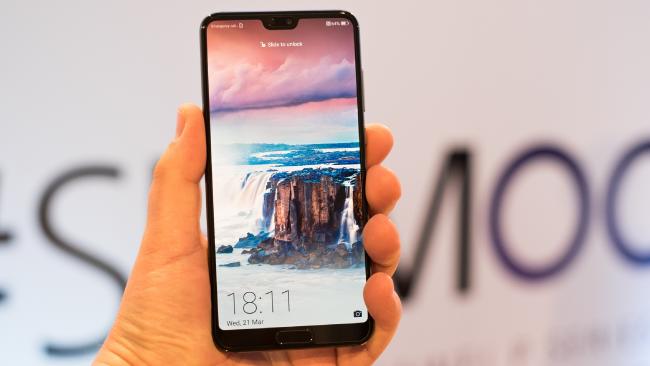
The Huawei P20 Pro isn’t worth the money. Picture: Karlis Dambrans/Shutterstock

AT LEAST three times a year, there will be new devices by phone makers not named Apple or Samsung that reviewers will claim are the cheap alternatives you've been spending your life waiting for.

Those reviews and news stories will tell you that, on paper, this device has everything you could ever want in an iPhone or Samsung Galaxy S device, but at a fraction of the price.

There will be the fastest processor, massive amounts of memory, a million cameras, it'll be fireproof or maybe even have the ability to cure world hunger.
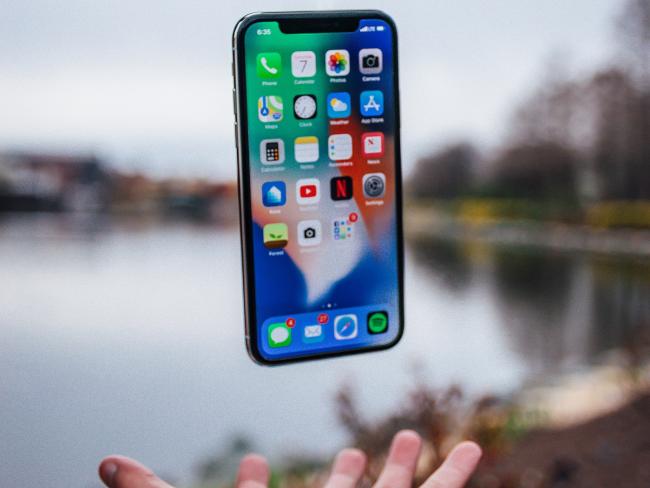
Apple’s iPhone X can feel like magic. Picture: Neil Soni

But saying something is better on paper rarely actually translates to it being better in real life. Things often come back to the old line: You get what you pay for.

After using both the Apple iPhone X and Google's fantastic Pixel 2 XL for the last nine months, I wanted to try something new and fell sucker for the marketing campaign and many of the seemingly glowing reviews of the Huawei P20 Pro. So I went and laid down $1099 in cold hard cash on the counter of my local JB Hi-Fi.

After all, this thing has three cameras that are meant to blow my mind, an amazing display and Huawei has claimed to have cleaned right up its previously woeful take on the Android operating system, which it calls EMUI.

This is a device that promises the world, it promises the iPhone X experience, but better, for $500 less. What's not to love ... on paper?

THE PREMIUM EXPERIENCE

Phones have been relatively unexciting up until the last 12 months. It was iteration after iteration with no seemingly huge leaps.

Then last year two new devices made things fun again - the Apple iPhone X and Google's Pixel 2.

Apple's made waves from its revolutionary design and gesture-based interface. If you use it for more than five minutes, you can tell this is how a smartphone should be.

The Pixel 2 from Google brought with it the first camera to truly challenge a DSLR. The pictures you can take on that device regularly blow your mind - whether it be in low light, taking pictures of landscapes or portrait photos. No smartphone has even come close to what it can produce.

But perhaps the best part about both of these devices is how much effort both Google and Apple have put into getting the little things right. You know, those things you don't notice on paper, or things that you might not realise when you play with your device for five minutes in the store before purchasing.

With the iPhone X it was just how easy it was to use. The gestures to swap between apps, navigate around the device and interact with its features all feel so natural - it's almost shocking how wonderful it is to use the device. You constantly find yourself simply enjoying the experience of just doing the little daily things you always do.

The team at Apple really thought about this. There's a lot of care and the engineers have obviously looked at it greatly from a functional user perspective.

In Google's Pixel 2, there seemed to always be little things that would surprise me and make it a delight. It's all-day battery life, the additional features such as "Now Playing" which can tell you what song is playing even in a noisy shop. And its camera - the glorious camera.

Google's camera engineers had taken a step back and focused on what people want to take pictures of, how they take pictures of it and designed software that processes photos in a way that makes anyone look like a professional photographer just by pointing and shooting from their phone. I mean, take a look at some photos I've taken on it below over the last few months - nothing here was edited, and was purely just pointed at and snapped.

This was super low light, but the Pixel 2 nailed it. Including a nice bit of depth. Picture: Harry Tucker

The dynamic range and how the camera focuses on this is honestly spectacular. I still can’t believe a phone took it. Picture: Harry Tucker

On the surface this might not look as impressive as the others, but the Pixel nailed the whites of this horse and the Icelandic snow. Something the Galaxy Note8 which was also with me struggled with, turning it very blue. Picture: Harry Tucker

Even Google's stock Android is now a breeze to use, with intuitive menus and intelligent Google Assistant. It all just works, it's fast, and everything is exactly where you want it to be.

WHAT THE IPHONE 'KILLERS' GET WRONG

Enter the Huawei P20 Pro. It's meant to be the device that takes Huawei into the same level as Apple, Samsung and Google. But every day I use it, I find a new reason to be frustrated by it.

Now Huawei has nailed the five-minute impression. The design is undoubtedly premium, the screen is gorgeous and it has a very intuitive night mode on the camera (which has three lenses) allowing you take pictures in light you didn't think was possible - handy, but also mostly just a sales gimmick.

Huawei has tried too hard to get everything in for that initial experience, for the money people want to pay - at the expense of the overall experience.

My first 48 hours with the device I found utterly infuriating, before I was able to disable certain things that improved it a bit. For example, by default, there's a setting on the device that will automatically turn off your mobile data when you connect to Wi-Fi, so when you leave that Wi-Fi network you find your phone suddenly stops loading anything before realising you need to turn that option off.

It's only a little thing, but it's not a pain you suffer with Apple, Google or Samsung.

It's the same with the camera that is constantly shouted about. Huawei obviously has some great sensors in the device, but it then over-processes every photo. This means that all your pictures look a little bit like you've painted it like an oil painting. Check out the photos below.
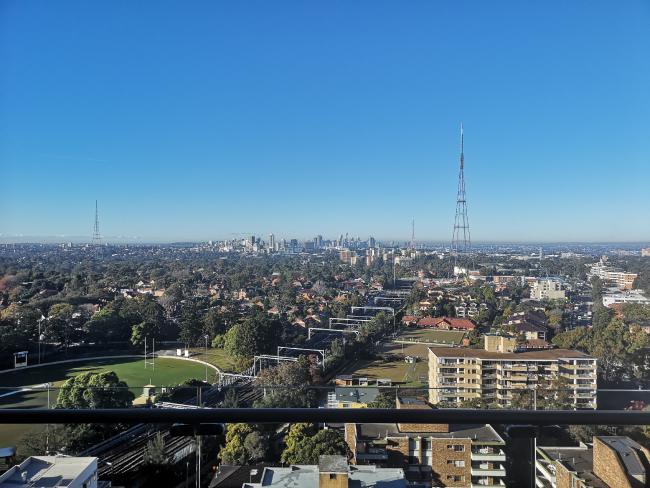
This should be an easy photo to nail. Lots of light, and the Huawei has a massive sensor. But unfortunately its post-processing means that everything has lost its detail and almost looks like an oil painting. Picture: Harry Tucker

Another photo murdered by Huawei’s processing. The meat patties and the bottle of Bulmers for example have lost pretty much all detail and are way too soft. Picture: Harry Tucker
I actually really love the depth that this photo has, and shows the strength of the lens. But yet, again, if you look closer into the tree, you’ll see how much detail has been lost. Picture: Harry Tucker

But the worst part is how criminally unintuitive it is to navigate around the phone. Sure, you can use your standard Android three buttons on the bottom, but then you also have a fingerprint reader below it that acts as a home button, meaning you're doubling up, wasting valuable screen real estate.

Huawei though, gives you an option to use that button for everything, by tapping, holding and swiping on it. But it couldn't have integrated it worse if it tried.

For example, to go back on the device, it's a light tap on the home button, but what often happens when you're trying to scan your fingerprint to, say, log in to your bank account app, it gets confused, and just takes you back instead of actually unlocking the app. This has happened to me countless times, on my ING app, Macquarie app and LastPass app.

Then there are things like bad lag when you scroll through web pages, and inconsistencies around font and menu sizes.

These don't sound like much now, but you often find yourself getting frustrated on these little things when you use the device a lot.

I'm not writing this to smash the Huawei device, nor these devices in general. The P20 Pro is generally a fine advice, but if you're looking to buy one of these budget flagship devices, just remember that they're budget for a reason.

I understand why people don't want to spend $1500 or more on a phone - it's a ludicrous amount of money for such a small device. So I can see why devices, such as this, and the likes of Oppo's flagship devices can be appealing.

But my advice for someone who's willing to spend $1100 on a phone is to just save that extra $400 for a true flagship option. This is something you spend hours using each day. That little bit of extra money for something that doesn't leave you frustrated with its experience, for something that just works is worth every cent.

I just wish I thought of it that way before I bought my Huawei.

Thursday, 5 July 2018

SS1 Student Constructs Moving Car

Meet an SS1 student of Anglican Grammer School Ogbomoso, Oyo State, who constructed a moving car with bathroom slippers and broom sticks. Lol

Guess what? the car has light all over it's body, wait for it, this young man also developed a power bank to power the car.


What an Engineer in the making, see his construction below....

Wednesday, 20 June 2018

Bank technology and the unhappily banked


I have always said that the future of African fintech (Financial technology) is banking but the future of banking is NOT fintech. Buying or owning technology by the banks is not enough if they can’t nimbly provide the services. There is a rapidly growing service chasm between banks and financial technology companies. Challenger financial technology companies will capitalise on this gap and could upend incumbents the same way new generation banks took over dominance from older banks in the past.

People moved from older to newer banks a couple of decades ago because of service-related issues. Those “new generation banks” (as they were called) have now grown old. History seems to be about to repeat itself as another generation of financial services companies, powered by technology, is springing up. New technology standards now make it much easier to set up a financial services company serving a niche customer base than ever before.  The only thing that stands between Nigerian banks and technology-powered disruption is not capital or technology; it is the regulator.

The regulator claims to act in the interest of the economy, but the economy is built by the people who are not being appropriately served. People would instead remain unbanked because being a bank customer provides more friction and no significant advantage. An airtime trader I know made a loss of four million Naira on one billion Naira turnover because of bank charges. He only now does cash transactions.

I told someone recently that if telcos had the same customer service issues that Nigerian banks currently subject their customers, the telco regulator would have heavily penalised them or shut most of them down by now. The reality is that competition would have forced the telcos to shut down even before the regulators mandated it. The Indian telecoms challenger company “Reliance Jio” on-boarded 160 million customers in just over a year after launch. That is the entire population of Nigeria for only one company! The competition in telecommunications and pressure on voice revenue by OTT (Over The Top) channel players has forced efficiency.

I believe the banks are ill-equipped to serve our vast population. They are struggling to catch up in a world where technological advances already exist to provide services to customers at scale.  Banking worldwide is seeing the same pressure as telco from financial technology companies that have emerged as “challenger banks”.  It is inevitable that well-capitalised challenger banks will soon appear to close the gap left by African banks.

The unhappily banked
There was a time in the past when merely going to pay or withdraw “your own money” from a bank meant waiting in long queues and taking what we used to call “tally numbers” to indicate when it is our turn. Cheques used to take days to clear; the entire financial sector was slow and prone to fraud. At the same time, making phone calls was also that difficult. Few people owned phones, and we used to also queue at street phones not only to make calls but receive calls.

I happen to have been in both telco and banking industries (post Y2k) when deregulation and tech overhaul was taking place. The response by both industry regulators to the quality of service issues is what led us to the progress we have made today. The banking regulator encouraged electronic banking and banks went on a spending spree to upgrade their infrastructure. New banks who were “technology-driven” were also given licenses to challenge the older banks. It is now possible for me to make USSD transfers via my phone from one bank to the other but I don’t think this alone is enough.

Bank technology seems to follow Murphy’s Law, an adage typically stated as: “Anything that can go wrong will go wrong”. A lot of things usually go wrong, and they are not fixed on time leading to customer discontent and even churn. Our population has also snowballed in the last twenty years. While the telecommunication companies have tried to keep pace with the growth, the financial service institutions have not fared so well.

Bank customers are unhappy. Banking halls are full again. “Tally numbers” have returned in a more sophisticated manner and this time it is mainly for people with customer service-related issues. It has taken two months for a bank to replace a faulty security token tied to my bank account. The service gap seems to be widening daily.

There is an increasing air of despair and frustration at the dismal service levels, and this can only mean one thing for the banks—the customers will seek better alternatives. Those alternatives are already providing services like consumer credit and others. The regulator keeps talking about reaching the unbanked with services, but those services are currently sub-par.  There is not enough focus on the “unhappily banked”. Banking cannot be forced on the population when banks do not provide services at a level that inspires confidence or delight. The handwriting is on the wall for banks, and it is written digitally.

Tuesday, 19 June 2018

EFInA sees huge Fintech opportunities in Nigeria


The Enhancing Financial Innovation and Access (EFInA) has raised the hopes about huge market opportunities for Financial Technology (Fintech) companies in Nigeria.At a forum it organised in Lagos, EFInA, a financial development organisation funded by DfID and Bill and Melinda Gates Foundation, said to really explore the opportunities in underserved and unserved areas in the country, Fintech operations can be expanded to accommodate them.

EFInA, launched in 2009, disclosed that through its Innovation Fund, it targets the economically deprived population, saying the fund shares risks with Financial Service Providers (FSPs) by providing grant subsidies through the Technical Assistance Grant and the Innovation Grant to the amount of $250,000 and $2,000,000 respectively.

The focus areas include agent networks, electronic payment, financial inclusive products and services especially across Northern Nigeria, women and financial literacy projects.EFInA’s Board Chair, Segun Akerele said, that the “essence of the forum was to request information from FinTechs on how EFInA can stimulate innovation targeted at the financially excluded through its grants, advocacy, research and capacity building.”He addressed over 40 different Fintech companies, regulators and digital financial service consultants that attended the forum. Akerele also appealed to the forum to see the financially excluded as partners and an asset in our bid to boost economic growth and increase GDP.

Presenting a paper on “Potentials for Driving Financial Inclusion Uptake through Fintechs”, EFInA’s Programme Specialists, Payments, Folasade Agbejule, said the firm’s access to financials survey of 2016, which covered about 23,000 respondents across Nigeria, 41.6 per cent of adults are financially excluded even though they have access to mobile phones.

“Also, these adults do not have access to formal and informal financial services. The digital financial service system has a role to play in this situation to reach low-income earners and people in the rural areas,” Agbejule said.

Associate Principal at Mckinsey and Company, Topsy Kola Oyeneyin, during her presentation on “Opportunities in Digital Financial Inclusion”, stated that “there is huge potential for digital involvement in Nigeria’s financial services, but this can only be attained if the three required building blocks are put in place.“These building blocks are widespread digital infrastructure, dynamic financial services market and the development of products people prefer to existing alternatives.”

At the panel session, Segun Akerele, Tunde Kehinde; Co-Founder Lidya, Ngozi Dozie; Co-founder Paylater/OneFi, Jude Njugo; Beyond Credit’s chief executive and Nonny Merenu; Unilever Sustainability Manager, discussed issues relating to the current state of financial inclusion in Nigeria, the FinTech landscape, the role of the Central Bank of Nigeria in driving financial inclusion in Nigeria as well as the barriers and challenges of the low income population to access financial services.The EFInA Grants Manager identified the regulatory landscape, the availability of credible data as very important factors in the development of digital financial services.

The FinTechs that attended the forum generally agreed that there was a need for constant dialogue between all stakeholders so that the current obstacles to financial inclusion can be removed and the Fintechs can play an important role in the development of our economy and the promotion of financial inclusion in Nigeria.Some of the Fintechs that attended the forum include Flutterwave, Lidya, Paga, International Finance Corporation, Paylater, E-settlement, Sanwo, OyaPay, Spacpointe, Amplify, Afarapartners, Capricon Digi, Cassava, among others.

Friday, 15 June 2018

Rolls-Royce cuts 4,600 jobs to boost profit

Rolls-Royce

Britain’s Engineering Company, Rolls-Royce, has decided to cut 4,600 jobs over two years in the latest attempt to cut costs and make more profit.

The Chief Executive Officer of the company, Mr. Warren East, said on Thursday in London that the aim was also to create a much more streamlined organization.

“Rolls-Royce is at a pivotal moment in its history,” East said.

“We are poised to become the world leader in large aircraft engines. But we want to make the business as world class as our engineering and technology is.

“We are proposing the creation of a much more streamlined organization. We have to significantly reduce the size of our corporate centre, removing complexity and duplication that makes us too slow, uncompetitive and too expensive.”

Rolls-Royce has 55,000 employees worldwide of which 26,000 are in Britain. The latest cuts follow previous job cuts and the creation of other roles following a series of profit warnings in 2014.

The company had said that two thirds of the job cuts would fall in Britain, where it employs 15,700 at its headquarters in Derby, central England.
It said the cuts would not affect its engineers.

“These changes will help us deliver over the mid and longer-term a level of free cash flow well beyond our near-term ambition,” East said.

“The people that will be leaving the business have nothing whatsoever to do with solving the issues our customers are having with our engines today.

“I know it sounds incongruous at face value, the loss of the workforce while we’re dealing with these issues but they’re really two separate issues altogether.”

East, a softly-spoken former tech boss, has overhauled the 134-year-old Rolls since he took charge in 2015 but the new cuts come as the group grapples with an aero-engine problem that has grounded planes and angered clients.

The announcement, which is not linked to the Trent 1000 engine issue, marks the biggest round of job cuts since the company was forced to retrench during the aviation crisis that followed the 9/11 attacks in the United States in 2001.

The plan will remove just over 10 per cent of the workforce, targeting duplication in corporate and management roles to try to save 400 million pounds ($536 million) a year by 2020.

East, who built the chip designer ARM Holdings from a start-up into Britain’s biggest tech company, has vowed to simplify Rolls and drive greater efficiencies to enable it to generate 1 billion pounds of free cash flow by 2020.

In January he divided the company into three business units and said he was now ready to remove management duplication between those layers and the corporate centre.

Rolls shares traded 2.7 per cent higher by at 851 pence early on Thursday after it published details of the plan.

Monday, 4 June 2018

The challenge of estimated billing

File photo

Yemi Oke

The best way to ensure the balance between the energy supplied and what an electricity customer consumes is to install a meter. And such a metering device can be either pre-paid or post-paid.

Estimated billing occurs when a customer does not have a meter. Generally, no electricity distribution company (DisCo) makes estimated billing its default billing system. However, a review of electricity utility billing practices, worldwide would indicate that estimated billing is a standard and conventional tool that is in much use, even in advanced economies.

In the case of Nigeria, the current metering gap of four million customers (2.35 times the 1.7 million metering gap specified in the DisCos’ performance agreements) goes back several years, long before privatisation and we cannot blame the investors who only took over in November 2013 for the growing historical metering gap.  As a matter of fact, the National Pre-Paid Metering Programme initiated by the Federal Government, prior to the privatisation, sought to address this gap but failed, due to corruption, lack of coordination, inefficiency, etc.  The failure to complete metering of customers prior to the privatisation was worsened by the absence of data on the total number of registered customers, now estimated at 7.47 million (likely still an underestimation of the number of customers, with the associated outcome of an even larger metering gap).

Consequently, the huge metering gap in Nigeria presents a Herculean challenge for the DisCos when it comes to measuring the consumption of their unmetered customers. Significantly, there is no more interested party in the comprehensive metering discussion than the DisCos.  And this is because it is estimated that metering alone reduces collection losses by 30 per cent. Additionally, it minimises the alienation of consumers who, often, underpay or do not pay their electricity bills, based on the disputed or crazy bills.

In recognition of the impossibility of comprehensive metering within the near to mid-term period, the regulator, the Nigerian Electricity Regulatory Commission enacted a regulation on Estimated Billing Methodology to guide the DisCos in their billing. Nonetheless, application of the methodology remains a very contentious process, as we have seen cases of overbilling (otherwise known as crazy billing) and cases of underbilling which, we, the consumers never talk about. Understandably, estimated billing is a vexing issue to un-metered customers, due to the perception of overbilling situations.

In all, I’m of the view that it is very unfair and difficult for both the consumers (in the case of crazy billing) and for the DisCos (in the case of underbilling). The estimated billing regulation provides for fair parameters and indices for the computation of electricity usage for unmetered customers.

Most times estimated billing is calculated based on the level and quantity of supply in any area and not necessarily driven by collection targets as it is widely believed. For instance, supply in close neighbourhoods may vary due to the type of supply lines and sources, i.e. 11KV lines to 33KV lines, illegal connections, and inefficient use of energy. Hence, billing would be based on quantity supplied to those neighbourhoods, irrespective of proximity. Still, there is no doubt that the current methodology is convoluted, counterintuitive and not transparent.

The question to be asked is; How did we get here in the first place? Alas, the power sector was neglected for an extensive period. The metering gap continued for several years unabated, yet we expect miracles within five years of privatisation.  A review of other jurisdictions that implemented electricity reforms with similar metering gaps would indicate that achieving the objective of comprehensive metering is a long-term endeavour, given financial and logistical constraints.

Regrettably, neither the metering obligation of 1.7 million meters specified under the DisCos’ performance agreements nor the investment assumption under the electricity tariff will get us to the nirvana of comprehensive metering anytime soon. The reasons for this are, a) Meters cost money and someone or some entity must pay for them.  Paying for them means that the cost has to be recovered through a higher tariff that would run counter to the affordability constraint of consumers; b) There is a practical and logistical limitation to purchasing and installing the total number of required meters in the near term; and c) While NERC has recently rolled out the Meter Asset Provider regulation that is expected to address the metering gap, this regulation cannot be successfully implemented without consideration of a sustainable commercial framework.  In other words, any operator/provider’s access to debt financing for metering, will be challenged by the reality of a sector that is currently suffering from over N1 trillion of market shortfall and debt.

I think that it is fair to conclude that the DisCos are not anywhere close to the level of efficiency that was envisioned under the National Electric Power Policy, 2001, the foundation for the subsequent legislation, Electric Power Sector Reform Act, 2005.  But is it reasonable to expect the DisCos to attain the desired level of efficiency, with an emphasis on metering, in an environment of regulatory and policy inconsistency, electricity theft; meter bypassing; overloading of transformers; obsolete infrastructure leading to technical losses; non-cost reflective tariff, etc.?

Crazy billing is not and will not be acceptable now or any other day. However, I would suggest that the challenges of estimated billing are best addressed through the prism of a transparent, hardnosed and unbiased assessment of the challenges and methodologies that either exist or that can be devised to address the emotionally charged issue of crazy billing.

For instance, the estimated billing methodology does provide a protocol for disputing a bill that is either excessive or not reflective of the consumer’s consumption pattern.  The MAP regulation is expected to bring both third-party meter vendors and associated capital to further ameliorate the metering situation, and expeditiously so.

The regulator will need to consider updating the estimated billing methodology to make it more transparent and user friendly, both from the operator and consumer perspective, for ease of respective determination of energy supplied and consumed.  Concerns about manipulated meters are addressed by the Nigerian Electricity Management Service Agency, as part of its mandate to ensure efficient electricity billing and measurement.  NEMSA remains committed to ensuring that only high quality and properly calibrated meters are installed across Nigeria.  Every allegation of meter resetting or fraudulent calibration by DisCos operators is promptly investigated by NEMSA.

An efficient electricity market is, and continues to be a defined outcome of the power sector reform effort. The elimination of estimated billing, largely, is one of the expected outcomes for an efficient market.  However, attainment of this efficiency is also predicated on other factors such as appropriate electricity pricing, increased generation, efficient regulation, forex availability, consistency of regulation and policy making and implementation, favourable lending terms, and other macro-economic dynamics that, unfortunately, have been absent to date.  Nigerians are anxious to witness a growth in the power sector. Such growth or progression, coming from a background with an order of magnitude of deficiency and inefficiency in the power sector caused by historical neglect, will require an associated order of magnitude of investment, commitment, focus, and patience, for its turnaround.

Prof Oke is an energy law expert based in Lagos.

Thursday, 3 May 2018

SCL Elections, Cambridge Analytica shut down after Facebook scandal


Facebook boss, Mark Zuckerberg [Photo Credit: BRG.in]

British marketing research firm, CambridgeAnalytica and its parent company, SCL Election, are shutting down operation after being caught in a major scandal of misusing users’ data obtained from Facebook.

In a press release late Wednesday, the firms blamed negative media coverage that followed revelations of their alleged misuse of over 15 million Facebook users’ data which they allegedly obtained from the social networking giant under false pretense.

Cambridge and SCL Elections “filed applications to commence insolvency proceedings in the U.K. The company is immediately ceasing all operations and the boards have applied to appoint insolvency practitioners Crowe Clark Whitehill LLP to act as the independent administrator for Cambridge Analytica,” the statement said.

The statement added that media “siege” had “driven away virtually all of the company’s customers and suppliers” and “as a result, it has been determined that it is no longer viable to continue operating the business, which left Cambridge Analytica with no realistic alternative to placing the company into administration.”

Different accounts said it was possible that as many as 87 million users’ data might have been collected in the Facebook scandal linked to Cambridge Analytica in a ruthless bid to profile prospective voters and target them for campaign ads in several countries, especially the United States.

Internal company documents made public by some Cambridge Analytica former employees alleged that SCL Election was involved in questionable election practices in Nigeria since 2007.

During the 2015 elections, Cambridge allegedly deployed scare tactics to dissuade potential voters of Muhammadu Buhari after being contracted by an unnamed businessman with ties to then-incumbent President Goodluck Jonathan, the UK Guardian reported.

Mr Jonathan denied asking any businessman to contract Cambridge Analytica for him and also denied entering into any contract with the marketing firm.

The companies addressed the allegations contained in the wave of scrutiny they received, saying “Over the past several months, Cambridge Analytica has been the subject of numerous unfounded accusations and, despite the company’s efforts to correct the record, has been vilified for activities that are not only legal, but also widely accepted as a standard component of online advertising in both the political and commercial arenas.”

In further denying the allegations, the companies said an independent investigator who was hired to probe the companies’ practices found no wrongdoing.

“In light of those accusations, noted Queen’s Counsel Julian Malins was retained to conduct an independent investigation into the allegations regarding the company’s political activities. Mr Malins report, which the Company posted on its website today, concluded that the allegations were not ‘borne out by the facts.’ Regarding the conclusions set forth in his report, Mr Malins stated:

‘I had full access to all members of staff and documents in the preparation of my report. My findings entirely reflect the amazement of the staff, on watching the television programmes and reading the sensationalistic reporting, that any of these media outlets could have been talking about the company for which they worked. Nothing of what they heard or read resonated with what they actually did for a living,'” the statement said.

The company maintained its innocence but said it would shut down notwithstanding after losing all its clients and suppliers and discovered that its brand had been irreparably damaged.

“Despite the company’s precarious financial condition, Cambridge Analytica intends to fully meet its obligations to its employees, including with respect to notice periods, severance terms, and redundancy entitlements,” it said.

Featured post

COMEDY VIDEO: NYSC CORPER SHORTER THAN TROUSER

COMEDY VIDEO: NYSC CORPER SHORTER THAN TROUSER Generally there are many challenges NYSC corps member face at their various orientation camp....